A Lower Mainland winter does not look like a prairie winter, and a strata checklist written for one will miss the other. Here, winter mostly means rain, day after day of it, cloudy dark days, and mornings that stay dark long after everyone is up, because BC no longer changes the clocks. It means wind storms that take power out. And yes, it sometimes means snow: typically a couple of weeks across the season with two or three or four snowfalls and some accumulation, and occasionally, like Langley saw a couple of years ago, two straight weeks of snow on the ground, enough that you need boots.
A strata council preparing for that winter is preparing for wet, dark, and windy, with snow as a real but occasional guest. The electrical side of that preparation is straightforward, and it is best done before the season settles in.
For a broader winterization checklist, see this guide from BFL Canada on getting a strata ready for winter.
A strata council preparing for that winter is preparing for wet, dark, and windy, with snow as a real but occasional guest.
Lighting for dark mornings, not just dark evenings
The first thing to check is the lighting schedule. With no clock change, December mornings stay dark well past the time residents leave for work and school. If the common-area, parkade, and pathway timers are still set for a summer pattern, or for evenings only, residents are walking to their cars in the dark.
Timers and photocells should be reviewed for both ends of the day: lights that come on for the morning rush as well as the evening return. The same review should cover parkade entries, stairwells, and pathways, where wet leaves and standing water make a dark surface genuinely slippery. Lighting does not fix drainage, but it lets people see what they are walking on.
Entries, parkades, and the places complaints come from
Most winter lighting complaints in a strata come from a short list of places: a parkade level that went dark, an entry that feels unsafe after sunset, a pathway nobody can see. A pre-season check of those areas, bulb by bulb and fixture by fixture, is cheaper than a month of complaint emails and an emergency call in the rain.
This is also the time to look at the fixtures themselves. A fixture that has spent a wet summer with a cracked lens or a loose seal will not survive a wet winter gracefully. Replacing it now beats replacing it in January.
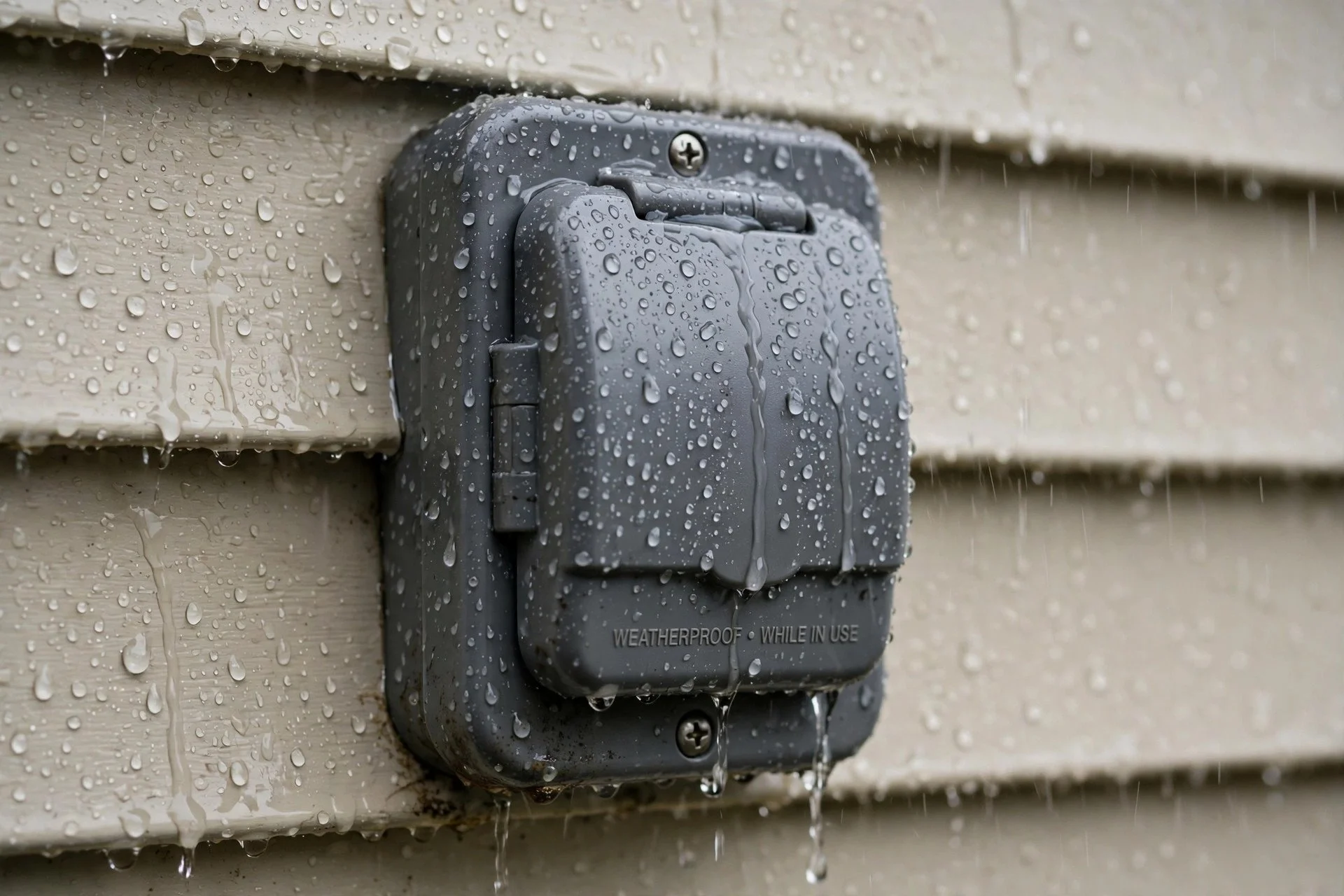
Wet-weather fittings deserve a pre-season look.
Wind storms and what happens when the power goes out
Wind storms are the Lower Mainland's version of a winter emergency. When the power goes out, residents want to know two things: what is still working, and who to call. A council should know, before the storm, how the building's emergency lighting and common-area systems behave in an outage, and residents should know where to find that information without hunting through old minutes.
If the building has a generator, it should be tested before storm season, not during it. If it does not, the council should know exactly what an outage means for elevators, parkade gates, lighting, and access, and have that written down somewhere residents can actually find.
Check the BC Hydro outage list for current outages before calling about the power.
The occasional snow week
Snow here is not the main event, but it happens, and it changes the checklist for the week it arrives. Pathways and parkade ramps need to be visible when they are covered, entries need light when residents are coming and going in boots and gloves, and any lighting that was already marginal in the rain will be worse under snow. A council that did its pre-season lighting check will find the snow week uneventful. A council that did not will find it in the complaint inbox.
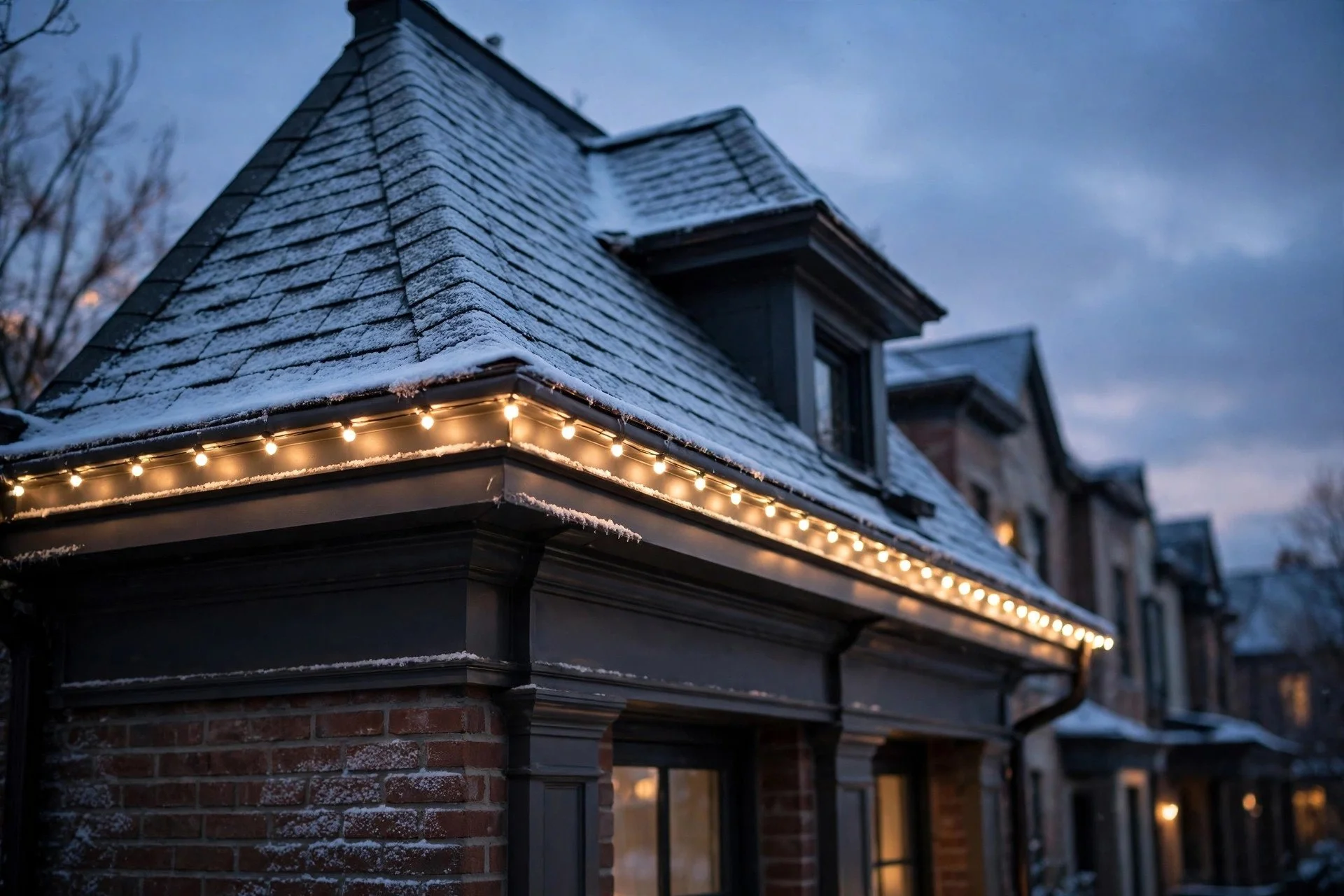
Snow is an occasional guest, but it still changes the checklist.
Holiday lighting, done properly
December also brings resident holiday lighting in common areas and on balconies, which is where strata electrical rules earn their keep. Clear rules, set early, prevent the usual problems: overloaded circuits, lights tapped into common-area power, and decorations left running unattended. If the building installs its own seasonal display, it should be planned as an electrical job, not an afterthought, with proper circuits and timers.
A short pre-season checklist
Review timers and photocells for dark mornings as well as evenings.
Walk the parkade, stairwells, entries, and pathways, fixture by fixture.
Replace cracked or water-damaged fixtures before the rain does more damage.
Confirm how emergency lighting and common-area systems behave in an outage, and make sure residents know.
Test any generator before storm season.
Set holiday lighting rules early, and plan any building display as an electrical job.
Talk to your strata’s electrician
Reisinger Electric works with strata corporations and property managers across Surrey, Langley, and the Lower Mainland, and is the exclusive electrician for a local housing co-operative.
Call (778) 805-7074 to talk through your building before the season settles in.