Ask three property managers what their electrical maintenance plan covers and you will get three different answers. That is not a problem with the question. It is the nature of the thing. A maintenance plan is built around a building, and no two buildings have the same electrical system, the same tenants, or the same risks.
So the honest answer to "what does a plan cover?" is: it depends. Here is what it can cover, and how the right plan gets scoped.
It turns electrical maintenance from a series of surprises into a line item with a history.
Scheduled inspections, not emergency calls
The core of any maintenance plan is regular, scheduled inspection of the electrical system: panels and distribution, common-area lighting, parkade and exterior lighting, and the equipment the building relies on every day. The point is finding problems on a schedule, not discovering them when something fails.
Inspections also create a record. For a strata council or a property manager, that record matters: what was checked, what was found, what was fixed, and what should be budgeted for next. It turns electrical maintenance from a series of surprises into a line item with a history.

Testing and inspection, done on a schedule.
Lighting maintenance, inside and out
Lighting is usually the most visible part of a plan, and the most complained about when it fails. A plan can cover regular checks and replacement of common-area, parkade, stairwell, and exterior lighting, including the shift to LED where older lighting is still in place. It can also cover timer and photocell adjustments as the seasons change, so lights come on when they are actually needed. In the Lower Mainland, that means dark mornings as much as dark evenings, since BC no longer changes the clocks.
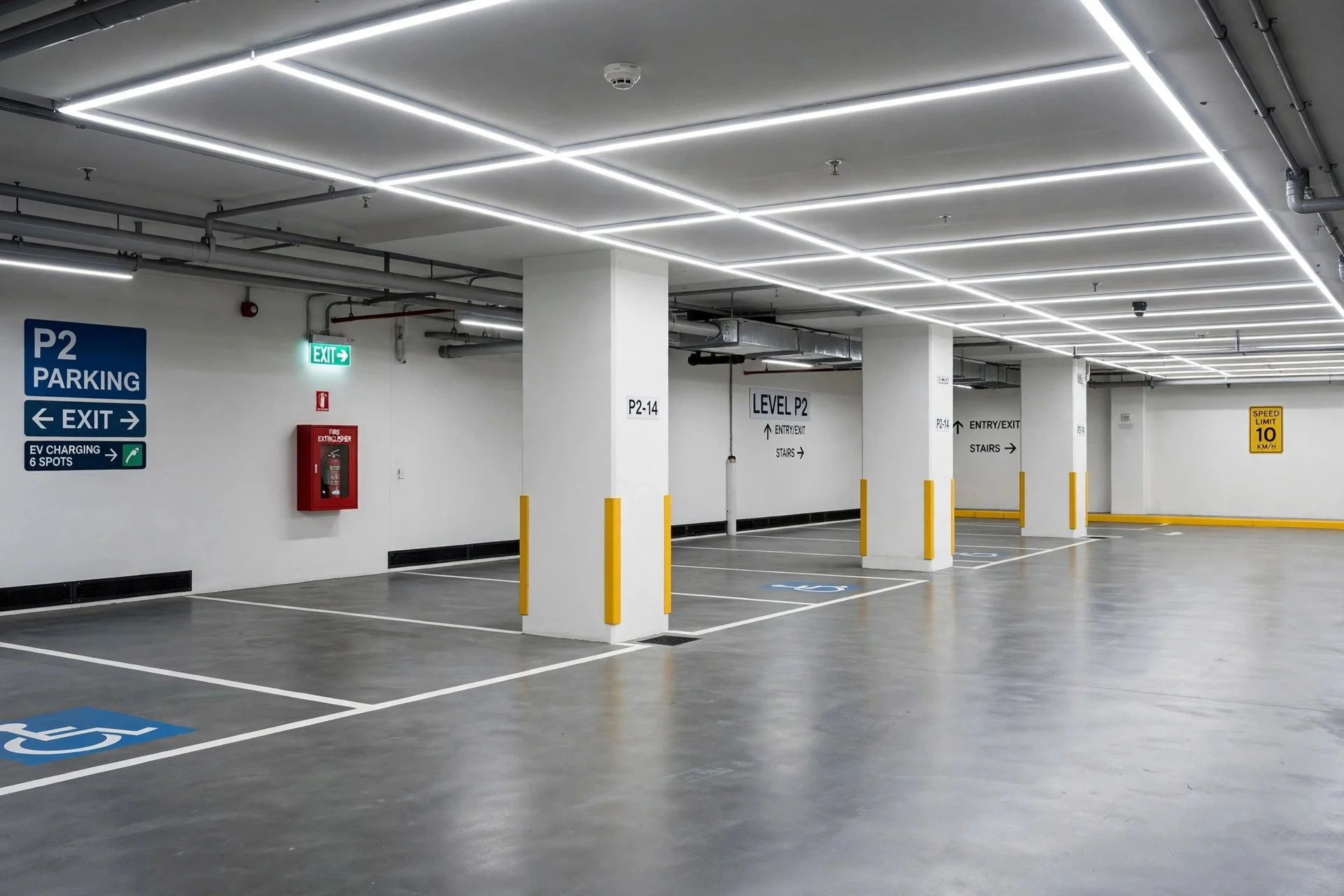
Parkade and common-area lighting, checked before it fails.
Safety systems checks
A plan can include scheduled testing of the electrical safety systems a building depends on: emergency lighting, exit signs, and related equipment, checked on a routine basis so failures are found during a visit, not during an actual emergency. The exact scope depends on the building type and what its systems require.
Budgeting for what comes next
One of the most useful things a plan does is separate "fix now" from "plan for later." Panels age. Equipment reaches end of life. A building that is adding EV chargers, renovating common areas, or planning a lighting retrofit needs to know what its electrical system can support and what will need upgrading first. A maintenance relationship gives the council or owner a straight answer to that question, with time to budget, instead of a crisis quote.
What a plan does not do
A maintenance plan is not an emergency service, and it should not be sold as one. It is a scheduled relationship: planned visits, documented checks, and a contractor who already knows the building when something does come up. If a building needs emergency coverage, that is a separate conversation with its own terms, and any contractor who bundles it in vaguely should be asked exactly what it means.
How a plan gets built
A real plan starts with a look at the building: the age and condition of the system, the size and use of the property, what has failed before, and what the council or owner actually worries about. From there, the plan is scoped to the building: which systems get checked, how often, what is included in the visit, and what is quoted separately.
That is why two buildings end up with different plans, and why a contractor who quotes a maintenance plan without seeing the building is guessing.
Before you hire anyone, confirm the contractor is licensed, and read the four tips from Technical Safety BC on finding the right contractor.
Talk through your building
Reisinger Electric works with commercial properties, strata corporations, and property managers across Surrey, Langley, and the Lower Mainland.
Call (778) 805-7074 to talk through your building and what a maintenance plan could cover for it.