An office that loses power loses a day of work. A farm that loses power can lose animals, milk, and crops in the same outage. That is the difference, and it is why farm standby power is its own subject, not a footnote to commercial power.
Abbotsford and the Fraser Valley are farm country: dairy, poultry, berries, mushrooms, and greenhouses, much of it running on electrical systems that never really switch off. When a wind or rain storm takes the power out, everything those systems protect is suddenly on the clock.
An office that loses power loses a day of work. A farm that loses power can lose animals, milk, and crops in the same outage.
Dairy: milking cannot wait, and milk cannot warm
Cows get milked on a schedule, and that schedule does not pause for a storm. Without power, milking equipment stops, and the milk already collected starts warming in the tank. Milk that warms past its safe range cannot be sold, and a missed milking is an animal welfare problem as well as a production problem. A farm standby system keeps milking equipment, cooling, and water running, so the parlour carries on as if the storm never happened.
Poultry: fans are life support
A poultry barn is a climate-controlled building, and ventilation fans are what keep it that way. When fans stop, barn temperatures climb fast, especially with thousands of birds generating heat. Heating matters too on a cold, wet night. For poultry operations, standby power is not about comfort or convenience. It is the system that keeps the flock alive through an outage, and the window for getting it back is measured in hours, not days.
Greenhouses: climate control is the crop
A greenhouse is a building full of plants that depend on fans, heating, lighting, and irrigation running on schedule. Lose climate control during a cold snap or a heat spike and the crop suffers, sometimes beyond recovery. Greenhouse operators know their margins live or die on consistent conditions, and a standby system is what keeps those conditions steady when the grid fails.
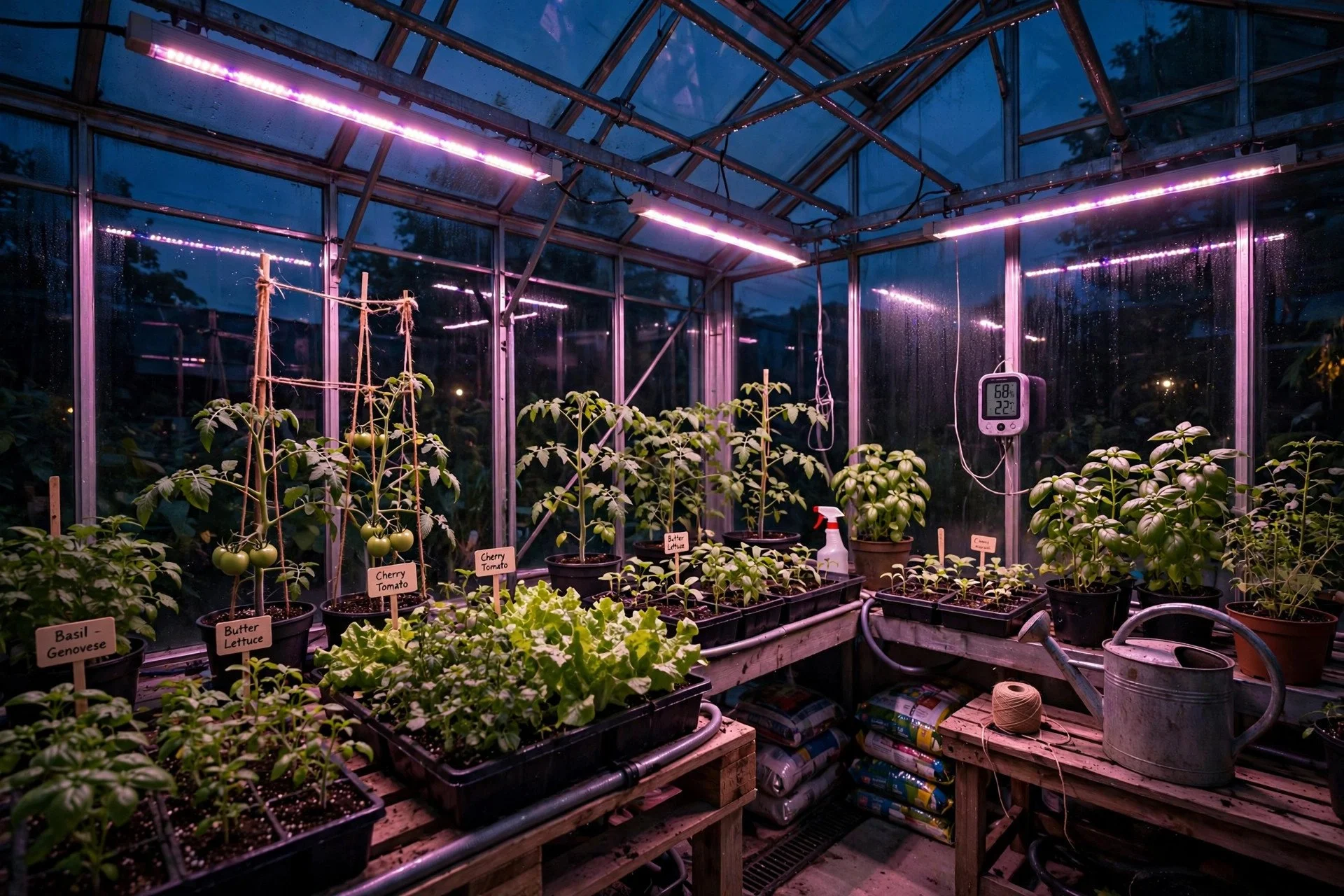
Greenhouse conditions hold steady when the grid fails.
Produce, cold storage, and water
Berries, mushrooms, and other produce need cold storage from harvest to shipping. A cooler that warms during an outage can spoil a harvest that took a season to grow. Water pumps matter too: livestock need water, wash-down systems need pressure, and irrigation schedules do not wait for the utility to restore service.
Why farms wait longest
Rural properties are often among the last to have power restored after a major storm, because repair crews work through damage in an order that restores the most customers first. A farm at the end of a rural line can wait substantially longer than a neighbourhood in town, through the same storm. That longer wait is the core of the farm case for standby power: the outage is not just more costly, it is longer.
Check the BC Hydro outage list to see current outages and expected restoration times in your area.
Farm loads are different, and sizing must respect that
Farm electrical loads are not like office loads. Pumps, fans, milking machines, refrigeration compressors, and greenhouse equipment draw far more power when they start than when they run, and many farms run three-phase equipment. A standby system for a farm has to be sized for those starting loads and that equipment, not just for the building's average draw. That sizing work is part of the design, and it is why a farm standby project starts with a real look at the operation: what runs, what starts together, and what cannot ever stop.
Fuel matters too. Where natural gas is not available, propane is the usual answer, and the fuel supply has to be sized for the outage the farm is planning for, not just the first few hours.
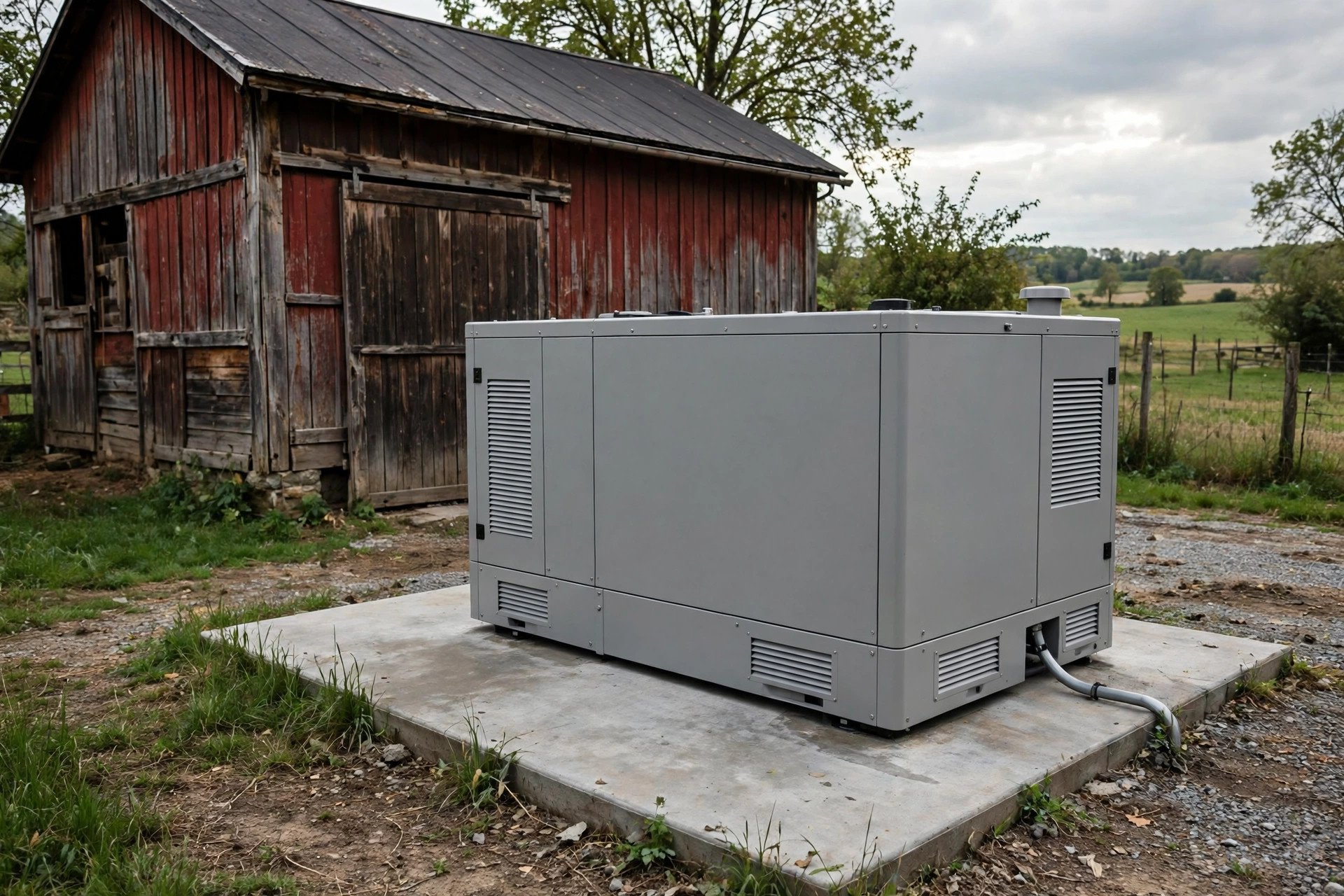
A farm unit on a pad, sized to the operation’s starting loads.
What installation involves
A farm standby installation is electrical work, fuel work, and placement work, done as one project. In BC, the electrical side should be done by a licensed electrical contractor who pulls the proper permits. The unit needs a suitable location with clearances, a fuel connection, and a transfer switch integrated with the farm's electrical system. After installation, the system is commissioned, tested, and set to run regular self-tests, so it is ready in the middle of a stormy night, which is when it will be needed.
Talk to a Generac partner
Reisinger Electric is an official Generac partner. We design and install standby power for farms, agricultural operations, and rural properties across Abbotsford, the Fraser Valley, and the Lower Mainland.
Call (778) 805-7074 to talk through your operation and what standby power would look like for it.