Indoor Christmas lights feel harmless. They are small, they are festive, and they have been part of December for as long as most of us can remember. But every year, indoor holiday lighting causes house fires, and the causes are almost always the same short list of preventable mistakes: too much plugged into one place, damaged strands that should have been thrown out, and lights left running when nobody is watching them.
Most of this list is ten minutes of homeowner care before the decorating starts. The rest, capacity, outlets, and breakers, is exactly the work that prevents fires, and that is electrician work. Keeping those two categories straight is the whole point.
If a strand is damaged, throw it out. Tape is not a repair for Christmas light wiring.
Start with the strands, not the tree
Before a single strand goes up, inspect it. Look for cracked or frayed wires, broken bulbs, loose connections, and plugs that feel warm or look discoloured. If a strand is damaged, throw it out. Tape is not a repair for Christmas light wiring, and a strand that worked last year is not automatically safe this year. Lights stored in a hot attic or a damp garage can come back in worse shape than you remember.
Use lights that carry a recognized certification mark for Canada, such as CSA (Canadian Standards Association). Uncertified bargain strands may look identical, but the certification is what says the product was actually tested.
For more checks like these, see the holiday safety guidance from the Electrical Safety Foundation International.
Buying online calls for extra care. Counterfeit and uncertified electrical products are a documented problem on online marketplaces, where third-party sellers can list products carrying fake certification marks. The mark needs to be on the product itself, not just in the listing photos. Buy known brands or from authorized retailers, and treat these as warning signs: a price drastically lower than comparable sets, generic packaging with no manufacturer name or contact information, and misspellings on the box. If a set fails any of those checks, do not use it.
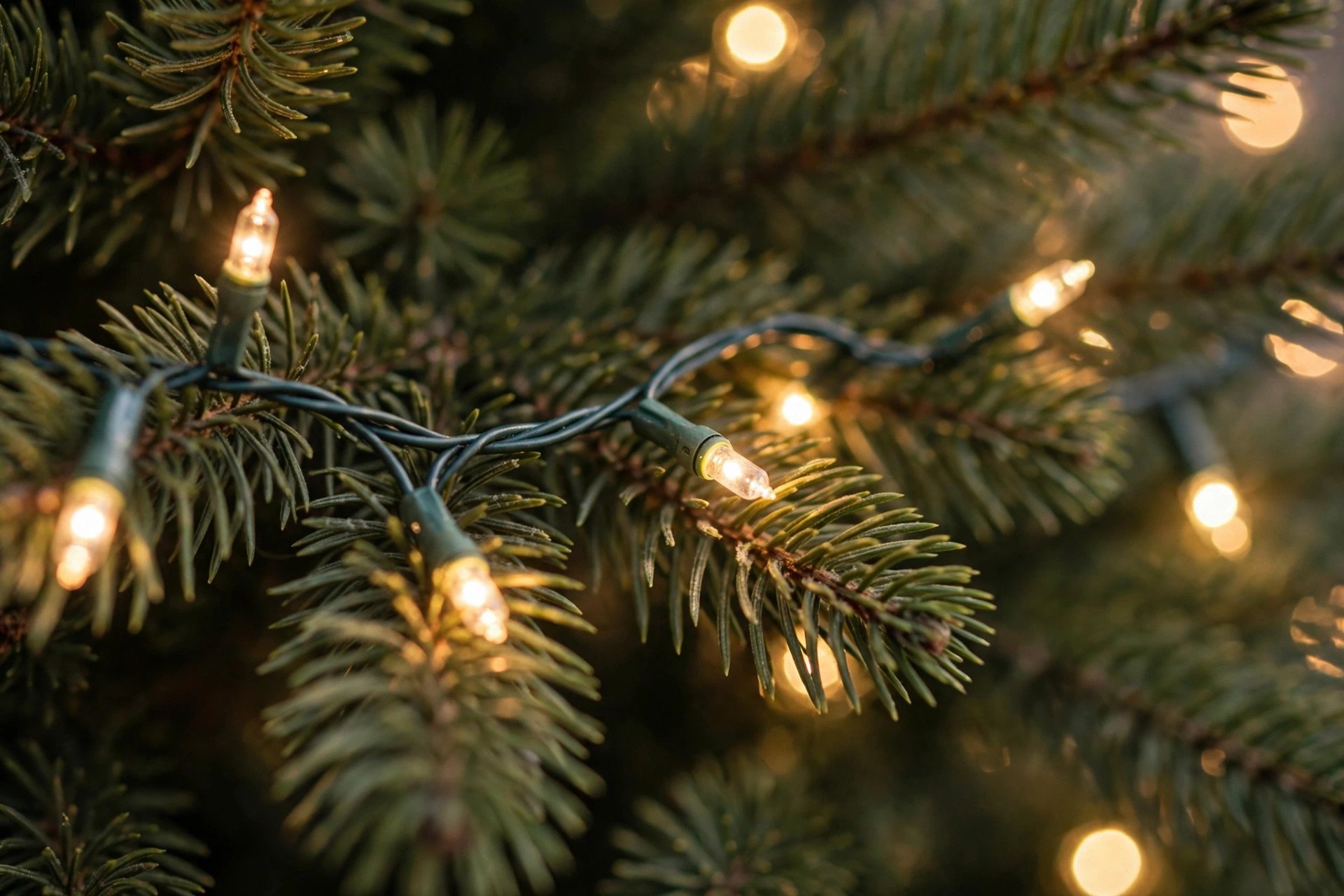
Inspect every strand before it goes up.
One outlet is not an invitation
The most common mistake is also the simplest: too many strands on one outlet, often through a chain of power bars and splitters. In the electrical industry, plugging one power bar into another is called daisy-chaining, and it is a fire risk, not a solution: the first power bar and its cord end up carrying the combined load of everything plugged into both bars, which they were not designed to do, and it violates the manufacturer’s own instructions for the bars. Each outlet and each circuit has a limit, and Christmas lights add up faster than people expect, especially older incandescent strands, which draw far more power than LEDs.
Count what is plugged in before you add more. If a power bar feels warm, if a plug is loose in the outlet, or if the breaker has tripped before, that is the house telling you the circuit is overloaded. Spread the load across outlets on different circuits, and never daisy-chain to reach further.
If you are regularly tripping breakers at Christmas, or if the outlets in the room are old, loose, or ungrounded, that is worth a conversation with an electrician before next December, not a bigger power bar.
LED lights are the safer choice
LED Christmas lights run cooler, use far less power, and last longer than incandescent strands. That cooler operation matters indoors, where lights sit near a tree, curtains, wrapping paper, and other things that burn. If you are still running old incandescent strands, switching to LED is the single easiest safety upgrade in the whole house at Christmas.
Placement still matters
Keep lights away from anything that can catch fire: curtains, bedding, paper decorations, and heaters. Do not run light cords under rugs or carpets, where damage goes unnoticed and heat builds up. Keep the tree itself away from heat sources like fireplaces, radiators, and candles, and keep the cords where people are not tripping over them or pinching them under furniture legs.

Garlands and lights, kept clear of heat sources.
Use a timer, and turn them off at night
Lights should not run while everyone is asleep or while the house is empty. A simple timer solves this without relying on memory: set the lights to switch off at bedtime and come on again in the evening. It also saves power, which is a nice bonus in a month when the bill is already climbing.
A timer helps with lights left on, but it does not fix an overloaded circuit or a room that does not have enough safe outlets. If the room cannot support what you want to plug in, that is a capacity question for an electrician, not a problem to solve with more splitters.
The five-minute checklist
Inspect every strand. Damaged means discarded, not taped.
Check for a Canadian certification mark.
Count the load. Spread strands across circuits, never daisy-chain power bars.
Prefer LED strands. They run cooler and draw less power.
Keep lights away from curtains, heaters, and anything flammable.
Do not run cords under rugs.
Put lights on a timer, and switch them off overnight and when leaving the house.
When to call an electrician
Most of this checklist is homeowner care and a timer. But call an electrician if breakers trip regularly, outlets feel warm or loose, lights flicker when other things switch on, or the room simply does not have enough safe outlets for what you want to do. Those are signs of an electrical system that needs attention, and December is a bad time to discover them.
Reisinger Electric serves Surrey, Langley, and the Lower Mainland.
Call (778) 805-7074 if something in this list raised a question about your home.
If you would rather skip the ladders and the tangled strands each year, permanent lighting from Watts Lights is the safer alternative.